The real chocolate synonyms and when to use them
April 20, 2026
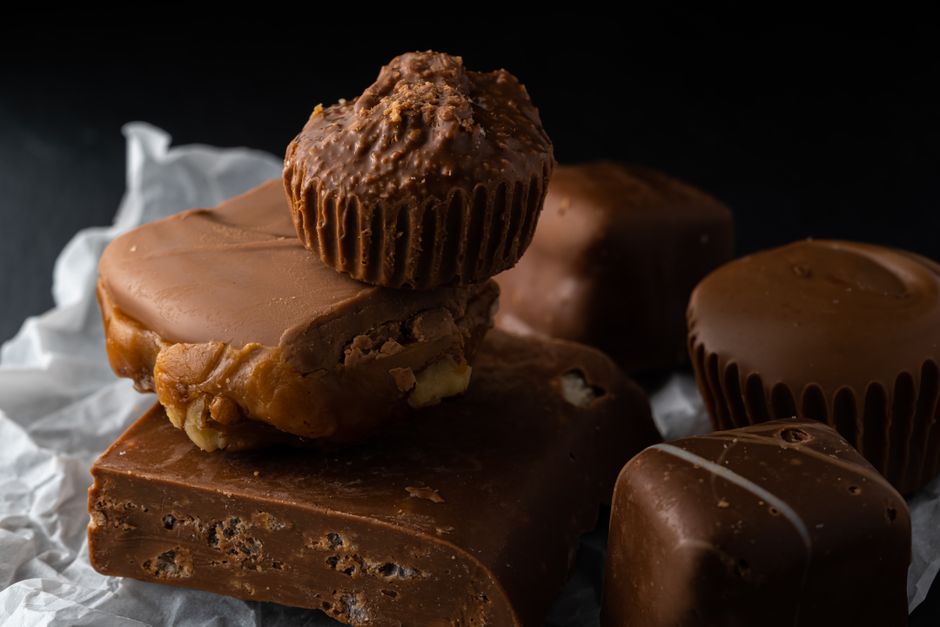
When you reach for a synonym for "chocolate," be careful. Most words in the thesaurus entry are not chocolate. They are candy. A bonbon is a chocolate shell with a filling. A praline is a nut-and-sugar confection that often contains chocolate but does not have to. Things like gumdrop, jelly bean, and popcorn balls share a pantry shelf with chocolate but have no cocoa in them. This article sorts the real food from the cousins, the confusion from the precision. If you need to write about chocolate and sound like you know what you are talking about, these chocolate synonyms will help.
What chocolate actually is
Chocolate is a food made from ground, roasted cocoa beans. The beans come from the cacao tree. After harvesting, they are fermented, dried, roasted, cracked, and ground into a paste called chocolate liquor. That liquor is then pressed, mixed with sugar, milk powder (for milk chocolate), and cocoa butter. The final product is solid at room temperature and melts around body temperature. That melting point is the whole appeal. The word "chocolate" comes from the Nahuatl word xocolātl, meaning bitter water. The Aztecs and Maya drank it spiced and unsweetened. Europeans added sugar and milk and turned it into a solid bar in the 19th century.
The adjective form means two things: made of or containing chocolate, and having a dark reddish-brown color. So a "chocolate cake" has chocolate in it, but "chocolate hair" just has the color. Context is everything.
The best synonyms, grouped by meaning
Real chocolate: bonbon, chocolate bar, chocolate drop, chocolate kiss, and torrone
If you write about actual chocolate products, use bonbon for a filled chocolate. Example: "The box of bonbons came with a guide showing the fillings." Use chocolate bar for a solid slab, usually eaten by breaking off squares. Example: "She unwrapped the chocolate bar and snapped it in half." Use chocolate drop for a small, round piece, like the ones used in baking or sold in bulk. Use torrone if you mean a nougat candy that often has chocolate coating (it is Italian and closer to a candy bar than plain chocolate).
Candy that may contain chocolate: praline, brittle, toffee, taffy, and caramel
Praline is a French and Belgian confection of nuts caramelized in sugar, sometimes coated in chocolate, sometimes not. Example: "The praline had whole almonds folded into the chocolate shell." Brittle, peanut brittle specifically, is a hard, flat candy of sugar and nuts, sometimes drizzled with chocolate. Example: "He broke off a piece of chocolate-drizzled brittle." Toffee is hard, buttery, caramelized sugar, often covered in chocolate. Taffy is chewy, pulled candy. Caramel is soft, cooked sugar with cream or butter. None of these are chocolate. They are neighboring flavors that overlap with chocolate coatings. When someone asks for "chocolate" but hands you a piece of toffee, a box of caramels, or a bag of taffy, a child will tell you that is not chocolate. Be as honest as a child.
Candy that is never chocolate: gumdrop, jelly bean, jelly egg, jujube, Life Saver, lollipop, rock candy, candy corn, cotton candy, bubble gum, and horehound
These words are in the thesaurus because they are all candy. But none of them contain cocoa. Gumdrop is gelatin and sugar. Jelly bean is a pectin or gelatin shell with flavored sugar inside. Life Saver is hard fruit-flavored sugar. Lollipop is hard sugar on a stick. Rock candy is crystallized sugar on a string. Candy corn is a seasonal sugar confection shaped like a corn kernel. Cotton candy is spun sugar. Bubble gum is gum base with sugar and flavor. Horehound is a bitter herbal candy. None of these are chocolate synonyms in the real world. They are synonyms only in the broad category of "candy." If you write a novel and describe a character eating chocolates, do not say she ate a gumdrop. That is a different candy entirely.
Old fashioned and specialty names: marchpane, marzipan, sugarplum, and Scotch kisses
Marchpane is an older English word for marzipan, a paste of ground almonds and sugar. Sometimes it is colored and shaped, sometimes it is coated in chocolate. But marzipan is not chocolate. Sugarplum is a small, round, hard candy, often flavored with spices or fruit. In the poem "Twas the Night Before Christmas," sugarplums danced in children's heads. They are not plums. They are not chocolate. Scotch kisses is an old name for a chocolate-covered toffee or marshmallow candy. That one actually has chocolate. Use it if you write historical fiction or want a charmingly obsolete term.
Words people mix up with chocolate
The biggest mix-up is using "chocolate" when the candy in the recipe is actually cocoa powder or carob. Cocoa powder is ground, roasted cocoa beans with most cocoa butter removed. Carob is a legume, roasted and ground to a powder that resembles cocoa. It tastes sweeter and less bitter. If you write a recipe and call for chocolate but really mean cocoa powder, the sauce will be dry and thin. If you call for chocolate but mean carob chips, the texture will be different because carob has no cocoa butter.
Another mix-up: nougat and nougat is a chewy or hard candy made from sugar, honey, and egg whites, sometimes with nuts. It is a separate candy that appears inside chocolate bars like the Milky Way or Snickers. It is not chocolate.
Antonyms
The opposite of chocolate in flavor is something sour or salty. Lemon drops, sour gummies, or saltwater taffy (which is not chocolate) are functional antonyms. In texture, the opposite of smooth, melting chocolate is rock candy, hard and crystalline. In color, cream or white is the opposite of dark brown.
FAQ
Can I use "cocoa" as a synonym for "chocolate"?
Only if you mean the powder. Cocoa is made from roasted cocoa beans with most of the fat removed. Chocolate is a solid bar or block that includes cocoa butter. In a sentence, "cocoa" can mean the drink made from the powder. Example: "She sipped hot cocoa." But you would not call a chocolate bar a cocoa bar unless you mean the brand name. Be specific.
Is "chocolate" ever used metaphorically?
Yes. People say "chocolate" to mean a deep brown color. Example: "She wore a chocolate dress." That works. People also use it to mean anything made of or strongly flavored with chocolate. Example: "This cake is very chocolate." That is casual but understood. Avoid using chocolate to mean something sweet in a general sense, because that turns the word into a vague compliment.
Look up chocolate in the thesaurus, or read more word deep-dives.
