A deep dive into 'thesaurus' and its synonyms
January 5, 2026
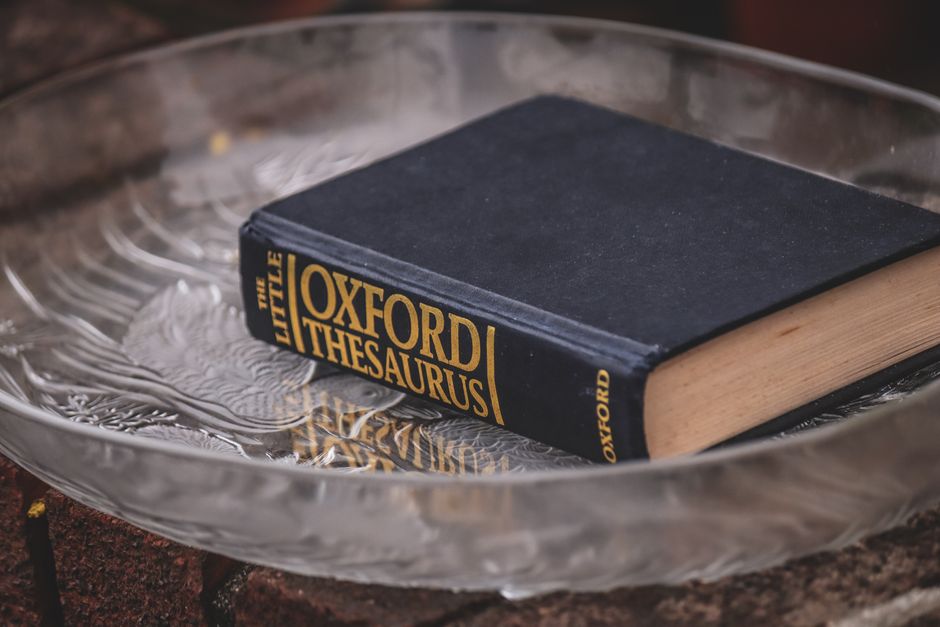
Consider the word 'thesaurus.' It describes a book or website that groups words by shared meanings, helping you find the right term when the obvious one is not quite right. But 'thesaurus' itself has synonyms, and these synonyms carry different weights and uses. A 'lexicon' is not the same as a 'glossary,' and a 'treasury of words' is not the same as a 'synonymy.' Let's sort through the options for thesaurus synonyms so you can use the precise term every time.
What 'thesaurus' actually means
In plain terms, a thesaurus is a reference work that lists synonyms (and often antonyms) for words. It groups words by concept, not by how they sound. The word comes from Greek thēsauros, meaning 'treasure' or 'storehouse.' That origin matters: a thesaurus is supposed to be a hoard of usable words, not a dictionary that defines them. The first modern thesaurus, Peter Mark Roget's Thesaurus of English Words and Phrases, was published in 1852. Roget organized his book into six broad classes and many smaller categories, so you could wander from 'abode' to 'dwelling' to 'habitation' like following a trail. Today we mostly search digitally, but the purpose is the same: to unlock other words that fit the same idea.
The strongest synonyms, grouped by shade of meaning
Not every synonym for 'thesaurus' works in every sentence. Here are the most useful ones, arranged by what they emphasize.
Formal and scholarly terms
Lexicon is the most common formal alternative. In linguistics, a lexicon is the complete set of words in a language. But in everyday writing, 'lexicon' can mean any specialized vocabulary or a book that lists such words. Use it when you need to sound academic or when you are talking about a field's jargon. Example: 'The lexicon of medical terminology runs to thousands of entries.' It feels heavier than 'thesaurus' and implies more authority.
Synonymy means a collection of synonyms or the study of them. It is rare in casual writing but exact in scholarly contexts. 'Roget's work is the most famous synonymy in English.' Use it only when you want to impress a linguist or sound deliberate. It is not a synonym for 'thesaurus' in the sense of a book you grab on your desk.
Gradus is a historical term for a book that lists synonyms and poetic terms, used especially by Latin and Greek students. If you are writing about classical education, it fits. 'The schoolmaster consulted a gradus for the right epic simile.' Outside that niche, avoid it.
Casual and reference-focused terms
Glossary is the simplest alternative. A glossary is a list of words with definitions, usually at the back of a book. A thesaurus is not a glossary, but in loose conversation people might call any word list a glossary. Use it when the focus is on explaining terms, not finding alternatives. 'The back of the manual includes a glossary of tech terms.' That is not a thesaurus, but the overlap is clear.
Dictionary is the word most people confuse with 'thesaurus.' A dictionary defines words; a thesaurus groups them by meaning. However, many reference works combine both. 'I used a dictionary and a thesaurus to write that sentence.' You can say 'dictionary' when you mean a general word reference, but the distinction matters for accuracy.
Wordbook is a plain, informal term for any book of words. It is rare but handy for beginners or children's references. 'She bought a wordbook for her daughter.' It is less intimidating than 'thesaurus.'
Metaphorical and vivid terms
Treasury or treasury of words echoes the Greek root. Use it when you want to emphasize the richness of the collection. 'The Oxford English Dictionary is a treasury of the English language.' It sounds poetic and grand. Reserve it for respectful, even reverent language.
Storehouse and armory work similarly. 'Armory' implies a collection of weapons or tools. 'A writer's armory includes a thesaurus for precision.' It works in persuasive or vivid writing. 'Storehouse' is plain but sturdy. 'The library is a storehouse of words.'
Repository is neutral and professional. 'The database serves as a repository of synonyms.' Use it in technical or data contexts.
Cache and arsenal lean into the idea of hidden resources. 'She kept a cache of synonyms for her essays.' 'Arsenal' suggests you plan to use them aggressively. Both are informal and best for dialogue or casual articles.
Specialized dictionaries
Many words in the source list are not general thesauruses but specific types. Use them when the domain matters.
- Biographical dictionary: Lists people, not synonyms. Not a thesaurus substitute.
- Gazetteer: A dictionary of places. Nothing to do with synonyms.
- Rhyming dictionary: Organizes words by sound, not meaning. Poets use it, but it is not a thesaurus.
- Slang dictionary: Specialized vocabulary. Could serve a similar function for nonstandard speech.
- Etymological dictionary: Gives word origins. Helpful for understanding a word's history, not for finding substitutes.
Words people mix up with 'thesaurus' and a couple of antonyms
The biggest mix-up is between 'thesaurus' and 'dictionary.' A dictionary tells you what a word means. A thesaurus tells you what other words mean the same thing. You reach for a dictionary when you do not understand a word. You reach for a thesaurus when you understand a word but want another one. That is the whole difference.
The word 'encyclopedia' also gets confused. An encyclopedia gives detailed background on topics. It is not a word-stocking tool.
As for antonyms: the true opposite of a thesaurus would be a book that gives no synonyms at all. That is not a real category, but conceptually it is a wordless book. More practically, the opposite of 'synonym' is 'antonym' or 'opposite.' So you might call an antonym dictionary the counterpart to a thesaurus. 'He found the antonym easier than the synonym.' Another conceptual antonym is monoglot dictionary, if the thesaurus is multilingual, but that is stretching.
FAQ: Two real questions
What is the best synonym for 'thesaurus' in academic writing?
Use 'lexicon' or 'synonymy,' depending on context. 'Lexicon' is broader and more common. 'Synonymy' is more precise but rare. In a paper about Roget's methods, 'synonymy' works. In a general introduction, 'lexicon' or 'thesaurus' itself is fine.
Is a glossary a type of thesaurus?
No. A glossary defines terms, usually specialized ones, and lists them alphabetically. A thesaurus groups terms by meaning. Some glossaries include synonyms, but that is not their main purpose. If you need synonyms for a specific field, a glossary might help, but do not substitute it for a thesaurus.
Look up thesaurus in the thesaurus, or read more word deep-dives.
